New York has always been the city of my dreams. It was the place my heart cried out to, as I sat on a City Tour Bus in 2008, while I stared at a lady running faster than the speed of the bus, carrying a briefcase, holding a coffee cup , wearing sunglasses and a pair of red heels , talking on the phone and smiling! And that was it. I don’t know what she did, but she was who I wanted to be.
After having completed two semesters of my MS in Integrated Marketing at NYU and interning with a multi-cultural media agency based in New York City, I have now started interning with Marc Jacobs as a production and development intern. I decided to intern with Marc Jacobs because I wanted to truly immerse myself into the culture of the city. To be honest, I was terribly afraid of the common snooty perception of fashion houses but I am amazed to see how compassionate and encouraging my managers are.
I am beginning to learn how Starbucks is frowned upon and how coffee from Balthazar is an everyday essential, I am learning how improper ordering from Seamless is and how a green salad is all that one’s meal must entail. I am also learning that tonic water with fresh fruits is a mandatory on your work station because water is just too mainstream. But among all these airs, there’s something profound that Marc Jacobs has taught me and that is to be real, to be true and to be you. I wear Anokhi pants to work, take steamed idlis for lunch, make green tea for myself in the kitchen and don’t drink coffee at all!
An Office Party at Marc JacobsNo piece of clothing can match the airy Anokhi pants!
Digital Marketing has escalated to a quintessential pedestal in our daily lives. It has become the oxygen we breathe, the new vitamin we need, the elixir to our lives and the daily workout we need to exercise our nimble fingers. Whatever it may be, we cannot escape it and hence, it becomes imperative to chalk out our digital strategy in a systematic, chronological manner.
Here are the 5 essentials for your Digital Strategy:
1.Data analytics is key:
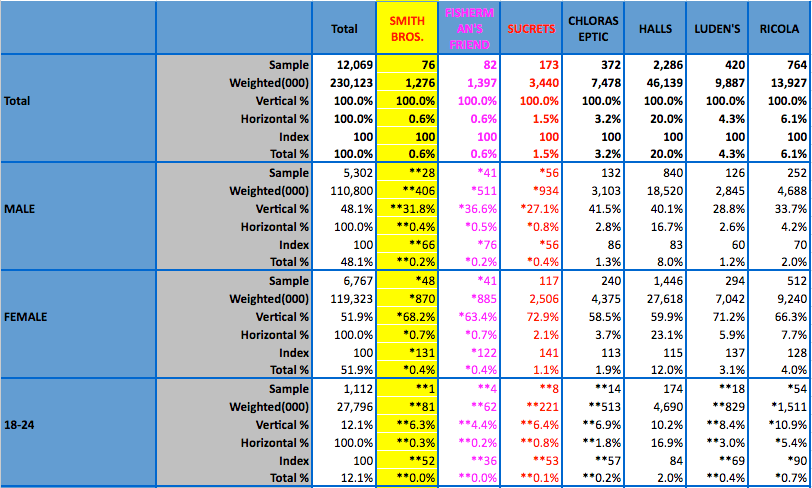
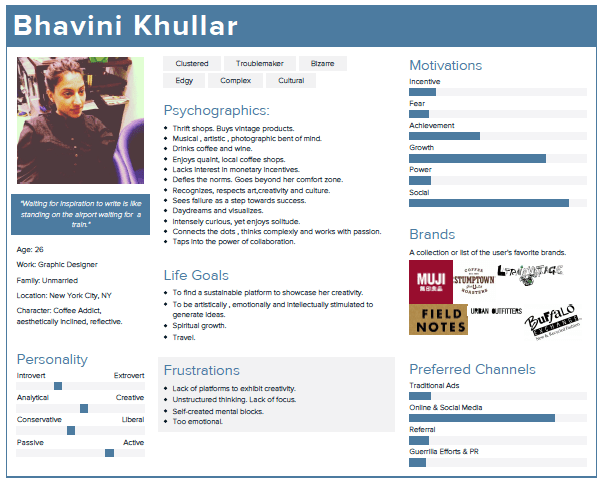
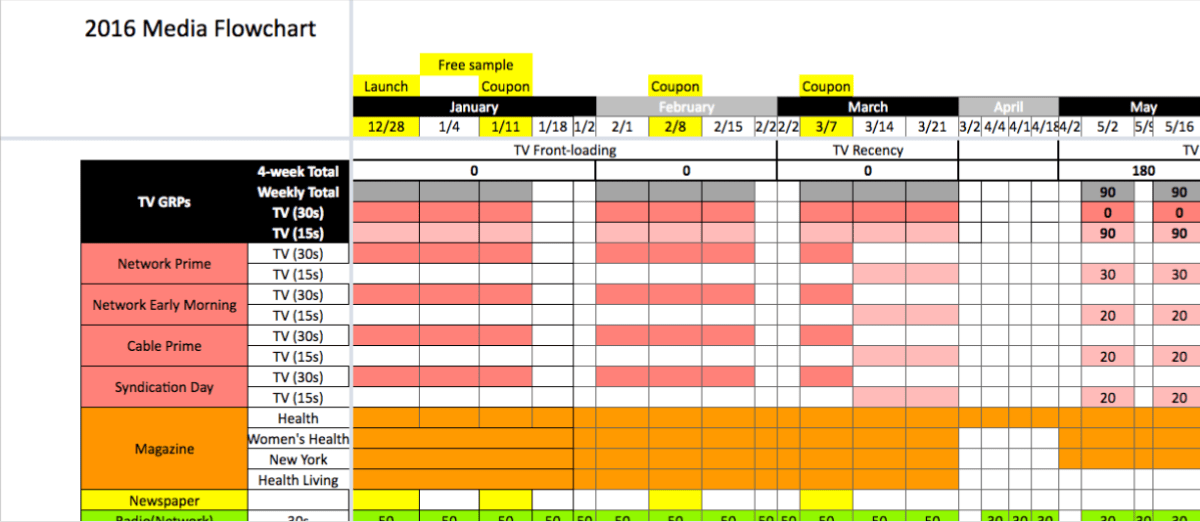
The value of data cannot be overemphasized; it is what defines the digital strategy. First it is essential to have a clear understanding of our target audience using databases such as Simmons/MRI.Having complete information about the customers is critical – Where they live, what they eat, where they dine, whether they have pets, what they do in their free time.This helps us find customer insights and helps us create customer profiles. Upon the completion of customer insights, effective strategies can be created. This includes strategic partnerships as well as the curation of statistical models for media buys.
A Simmons Run to study the Gender and Age of the Target Audience as opposed to the Competitors.The creation of Customer Personas based on the Demographics and Psychographics of the Simmons Run.The creation of a Strategic Media Buy based on the Customer Insights.
Hence, this data driven process helps us define the amount of money that would be feasible towards an effective Digital Strategy, with a lucrative ROI.
Data is also essential when strategies pertaining to improving the clicks, impressions, bounce rate , average time spent have to be developed. These offer KPI’s to our digital campaigns. For example, the KPI for e-mails is open rate, hence it becomes essential to configure the current open rate as well as the Industry’s Open rate, in order to create a goal, which should be reasonable and achievable.
For example, one can use Similar Web to decipher the several statistics pertaining to a site, in order to set KPIs post campaign and to even understand how to allocate the funds in the digital strategy – whether to improve the bounce rate, or to increase the impressions and by how much.
SimilarWeb provides a Snapshot of how the engagement metrics in Zara currently look.
2. User Experience:
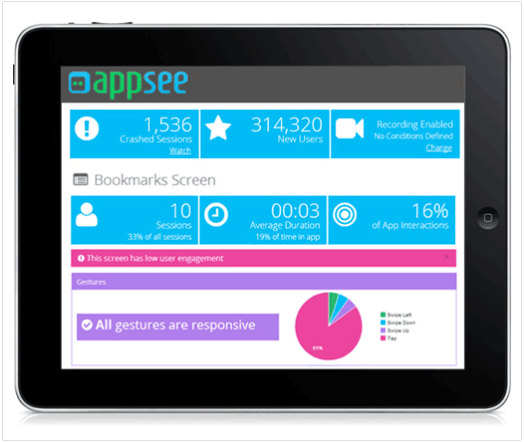
User experience has grown volcanically. Its has transcended beyond the layout, font, text, speed and the look of the website. Tools such as Appsee can be used to measure the user experience of apps using tools such as heat maps and helps create more user friendly , less complicated web layouts on the mobiles as well as the destops.
Appsee, used to measure the UX of Apps using several tools such as engagement and heat maps.Heat maps help monitor the traffic and helps understand where the eyeballs are most probable to look.
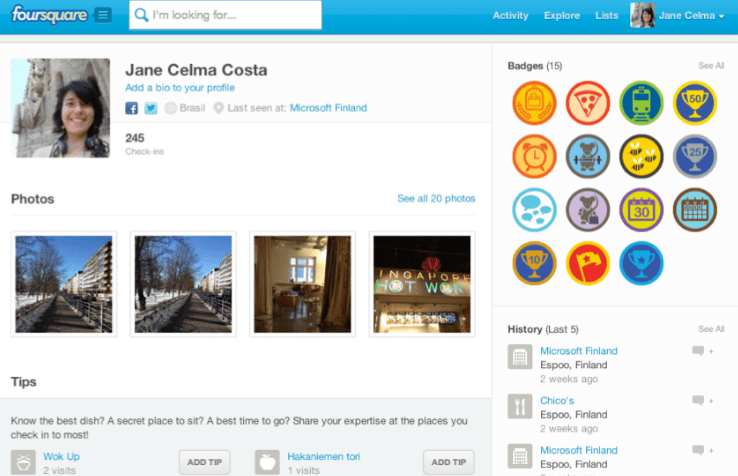
User Experience has to be made more interactive and is now encompassing tools like gamification, which stimulate customer interaction with the brand and make it more interactive and engaging. These apps provide levels and scores to the users, adding an element of fun and competition among the users. For example, Foursquare uses gamification on its app by providing levels to the users in order to be able to share the status on social media as well as map the performance in order to engage the customer even more.
Gamification used by Foursquare – Swarm provides
3. Content is still king:
The objective of a content strategy is to produce content and distribute it through various channels in order to create engagement among the target audience.
There are several formats of content curation such as blogs, videos, emails, podcasts, social media, white papers , audio formats and the list goes on. These snippets of crisp information enhance the value of the brand and create more authenticity and trust in the company. Companies also employ the concept of native advertising through content. This means talking about the product in a story telling format and creating the need in the mind of the consumer.
The goal is really to position the brand as an “innovator” in the given field and build enrichment, faith and engagement.
Content marketing is about penetrating into the everyday life of the target audience.
Here are a few examples of exemplary content strategies displayed by companies.
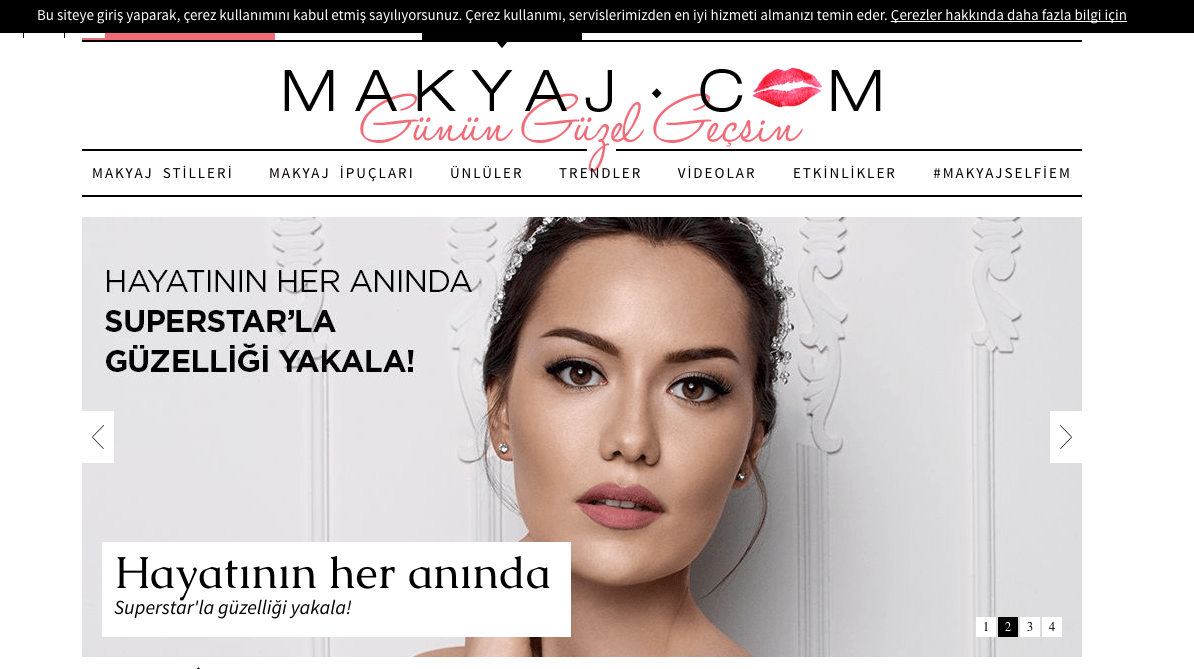
Turkish Content page for beauty ( sponsored by L’oreal)
Burberry, too has pioneered the art of creating effective content strategies. Its Youtube channel provides help content to its customers and answers questions pertaining to styling options and how to pair clothes. The YouTube channel creates Acoustic versions of songs, penetrating into the everyday lives of the target audience in order to be more relevant. Brands are now going beyond what they create and have a more holistic approach towards their consumers.
4. Mobile Marketing:
2015 was the first year that mobile traffic exceeded that of desktop users. Target audiences are now going after their mobiles phones before they reach out to their desktops and hence with the emergence of apps that have literally taken over the individuals by a storm it is essential to have apps wherever applicable and at least have a mobile optimization strategy. Brands are now blurring the differences between social and e-commerce and hence it has become important to be on social media channels and use apps such as Snapchat, especially if video is a platform that can enhance the user experience.
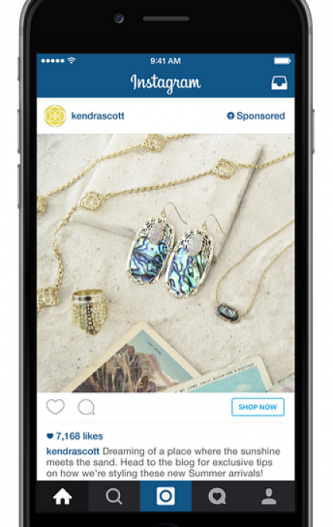
Well-known social platforms are taking their awkward first steps into becoming shopping centers.
Image Source: Adweek
Mobile Ad Networks Worth a Look
With this new medium gaining in popularity by leaps and bounds, it’s no surprise that a handful of mobile-friendly ad networks have cropped up to take advantage of tech-savvy surfers. Some of the largest and most highly recommended networks include:
Jumptap – One of the largest mobile advertising networks, Jumptap holds patents on many innovative types of mobile content monetization and targeting technology.
AdMob – Google’s mobile ad service, AdMob integrates advertising within apps to let content publishers and app developers earn money and expand their reach.
5. Omni channel Marketing:
Omni channel marketing is a brand experience created to reach the target audience across as many marketing channels as possible.Google reports that 90% of consumers move between devices and channels when making a purchase.These marketing channels include: websites, email, social media, print, aerial advertising, mobile apps, the physical store or even a catalog via devices such as phones, laptops, TV. Hence, it becomes necessary to integrate these channels with the devices to create a smooth brand omni channel experience.
Here is an example of how Macy’s has very successfully implemented its omni channel marketing strategy, in order to reach out to customers across platforms and different media.
Hence, the above are the 5 most essential components for an effective digital strategy which are a complete must haves for any company across any industry in order to be successful in the digital space.
Omni channel marketing is not a practice, but the creation of a mindset. It is a brand experience created to reach the target audience across as many marketing channels as possible.Google reports that 90% of consumers move between devices and channels when making a purchase.These marketing channels include: websites, email, social media, print, aerial advertising, mobile apps, the physical store or even a catalog via devices such as phones, laptops, TV. Hence, it becomes necessary to integrate these channels with the devices to create a smooth brand omni channel experience.
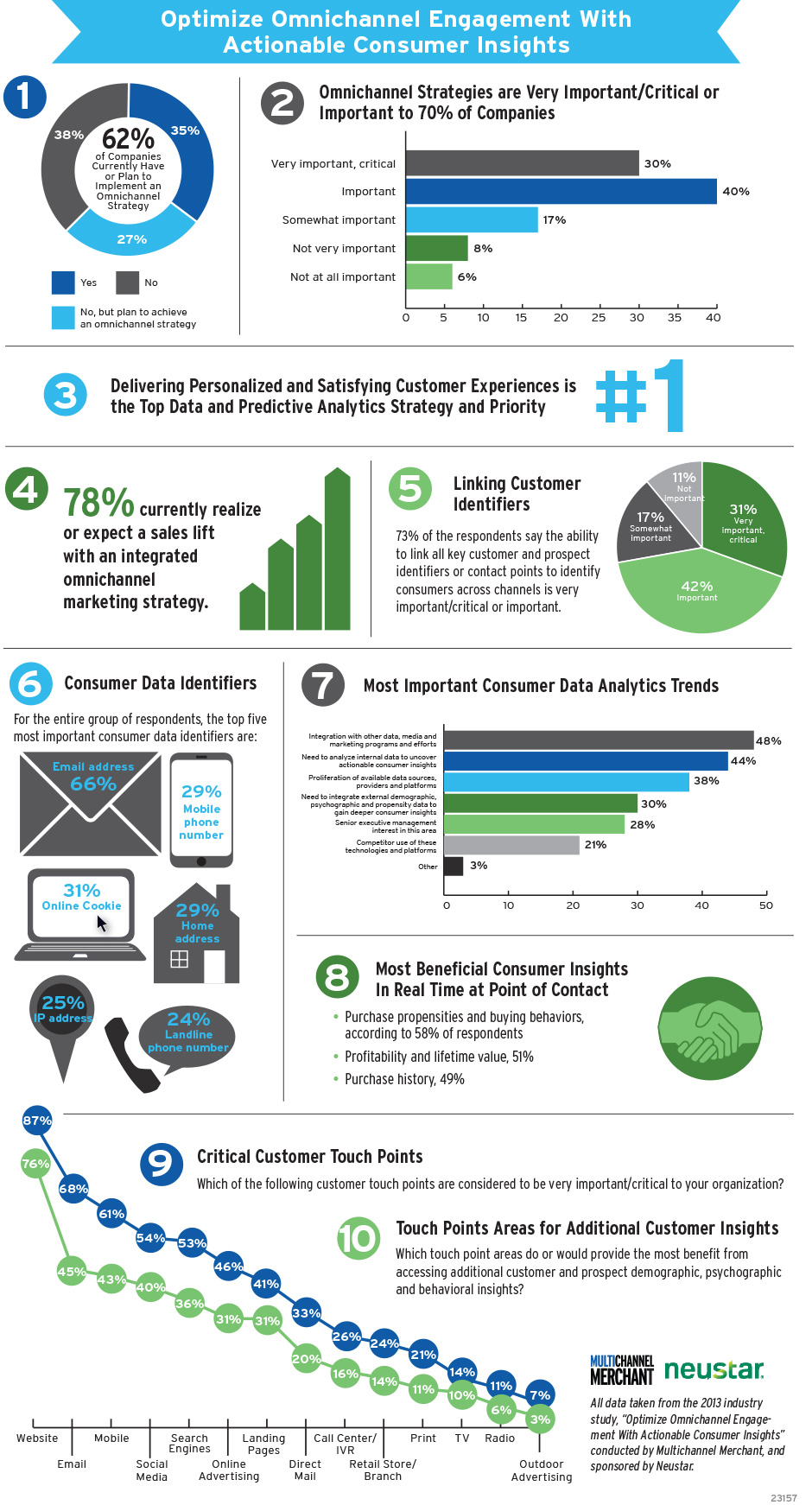
The reason why Omni Channel marketing has evolved as an extremely scientific and mathematically lucrative method is because of the emergence of predictive analytics technology as well as the ability to leverage customer data. The infographic from Neustar underscores my opinions on the advantages of omni channel marketing. According to the infographic, 40% of the companies sampled, stated that omni-channel marketing is important to their companies and 78% of the businesses realize the importance of omni channel marketing in today’s world.
Omni channel is not the same as multichannel.
Multichannel experiences are what most businesses currently employ in their marketing strategies. These businesses have a website, blog, social media profiles, and other traditional channels for marketing and sales. These are all used to communicate, educate, and market to their current customers and potential new leads.The problem is that these channels are often used separately, and can lack unity and consistency as a result. There is no seamless experience for the target audience.That is where an omni channel experience can improve on multichannel. Omni channel strategies take into account all devices, platforms, and contexts of the customers experience. These insights are then integrated with several marketing platforms to create an omni channel marketing experience.
To understand the concept of omni channel marketing, let’s study an example to help us understand the concept better and dissect its positives and negatives as well as how innovative this concept is.
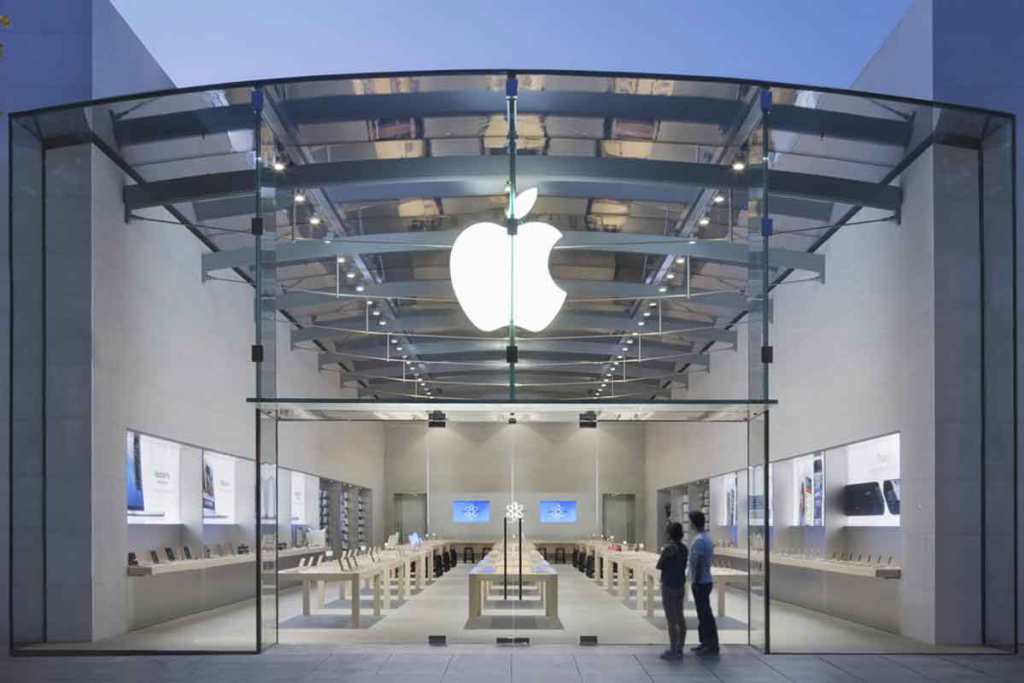
Apple is the first company that popped in my mind as the perfect example of creating a unique, omni channel marketing experience. When we use an Apple laptop , find the product online, or walk into an Apple store, we know exactly what your experience is going to be – a sleek, simple, classy experience. The feel of the brand is seamless across the different channels and that’s what makes it a pioneer of omni channel marketing.
According to Invoca, there are four pillars of omni channel marketing: visibility, measurement, personalization and optimization.
Visibility: Marketers need to focus on the right set of tools that allow them to have complete visibility into the entire customer journey — From first interaction to completed sale, and everything in between.
Measurement: Give proper credit where credit is due, to optimize your marketing efforts, and to provide a one-to-one, personalized customer experience.
Personalization: Integrate online and offline behaviors into your automation tools to create the most successful omni channel customer experience.
Optimization: Optimize marketing with complete insight into the online and offline impact to make more powerful optimizations and smarter decisions.
Hence, Omni channel marketing is innovative because it has transcended beyond multi channel marketing due to the complex behavior of the target audience who constantly switch devices and consume the same data from different media. The pluses for an omni channel marketing strategy cannot be over emphasized, the advantage it that helps create a brand for the company and position it in a unified manner in the minds of the consumer.I cannot think of any disadvantage other than a cost implication for the brand. Companies have to now spend a ton of money on creating brands that project the same image in the stores , on the apps , on the website or even the catalog- it is all about enhancing the brand experience, but with a price tag, is it worth it? Yes, of course. It is not a fad, it is a concept with solid, steel foundation and must be understood and implemented correctly by marketers. I would highly recommend creating this omnipresent omni channel marketing experience, because every great brand that projects itself as a culture and not a company is creating this smooth transition experience – be it Starbucks, Anthropologie or even Amazon.
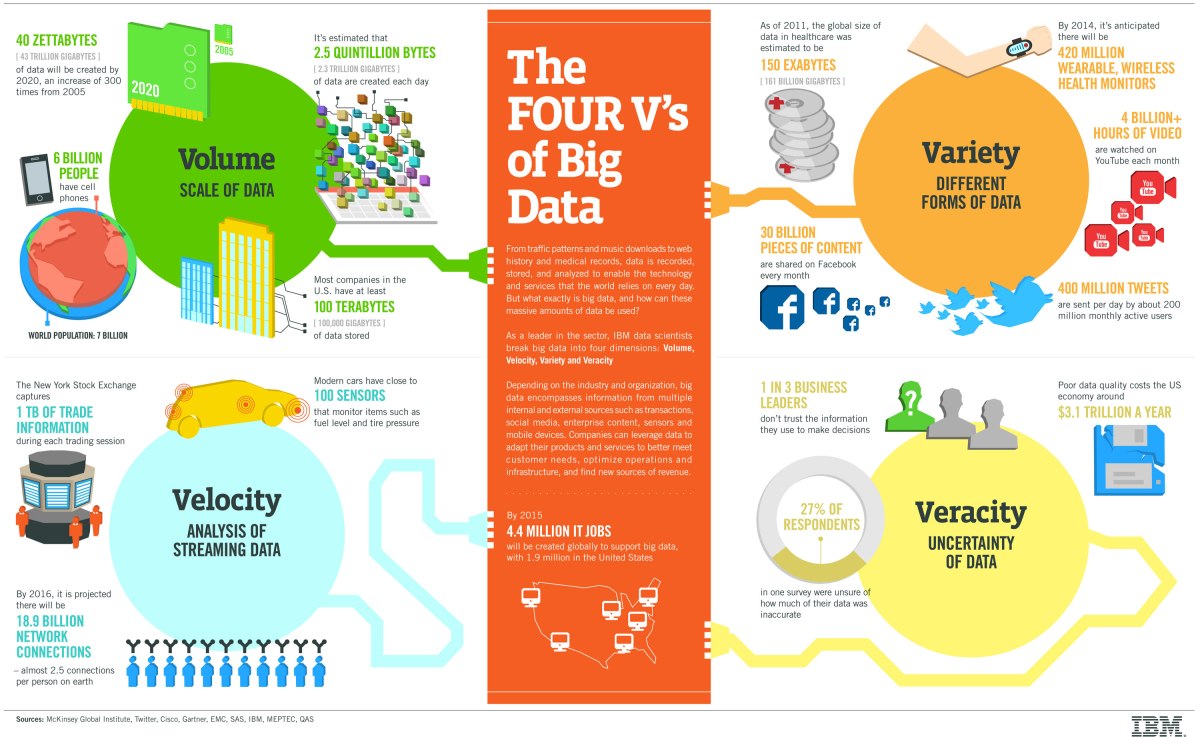
Companies glean a wealth of information about target markets and their behavior from their online activity, point-of-sale transactions, loyalty programs and public domain databases. However, simply accumulating data is not enough to gain a competitive edge. To do so, data must be used strategically, which is why big data is being leveraged by corporations of all sizes. IBM underscores the four V’s of big data namely :Volume, Velocity, Variety and Veracity in the info graph given below, each of which is undeniably crucial.
Traditionally, big data has been gathered and analyzed by the business intelligence units of companies, but the trend now is towards democratizing data in organizations so that all departments can develop strategies based on the analytics and insights available to them.
The Vice President of Prudential, Mark Hug came for a lecture to our class at NYU and explained the importance of big data in every industry in today’s world. He pointed out how he is working towards using big data to provide an estimate of insurance premium to its customers without the complicated process of conducting medical tests as well as making expensive trips to the houses of the insurance seekers. He said that the customers will only have to provide their social security numbers and the company would give an estimate within a couple of seconds. This has been made possible only because of the fact that Prudential would have a mammoth of big data – access to every transaction made by the consumer, the websites visited, the logs of the bills at medical stores, doctor visits as well as purchases made at grocery stores. This data directly correlates to the medical conditions of the insurance seeker and would thus help in estimating insurance premiums. This is the power of big data. Hence, big data helps understand consumer behavior, in order to create constructive, long lasting, strategically focused marketing strategies that are results driven and goal oriented.
My concern with big data is privacy. It makes me feel like someone is invading my privacy all the time and nothing, virtually nothing is personal. Whether companies use this data to retarget ads or even use data to provide me information about what I could also like to buy after making a purchase on Amazon, it makes me feel predictable and that’s also what I don’t like.
We cannot trust every bit of data because there are several metrics behind every transaction, search or purchase made online. May be I read up about cancer for my friend, may be I purchase medicines for my aunt, may be someone else accesses my laptop – there are too many dynamics to the diverse transaction, so data cannot and should not be analyzed independently. One needs to articulately combine data with personal judgment, analysis , past experience, competitive landscape as well as a degree of intelligence and gut in order to take prudent marketing decisions. Hence, I believe one cannot take decisions only based on past data, it needs to be correlated with other parameters, keeping the future changes in demographics and psychographics in mind.
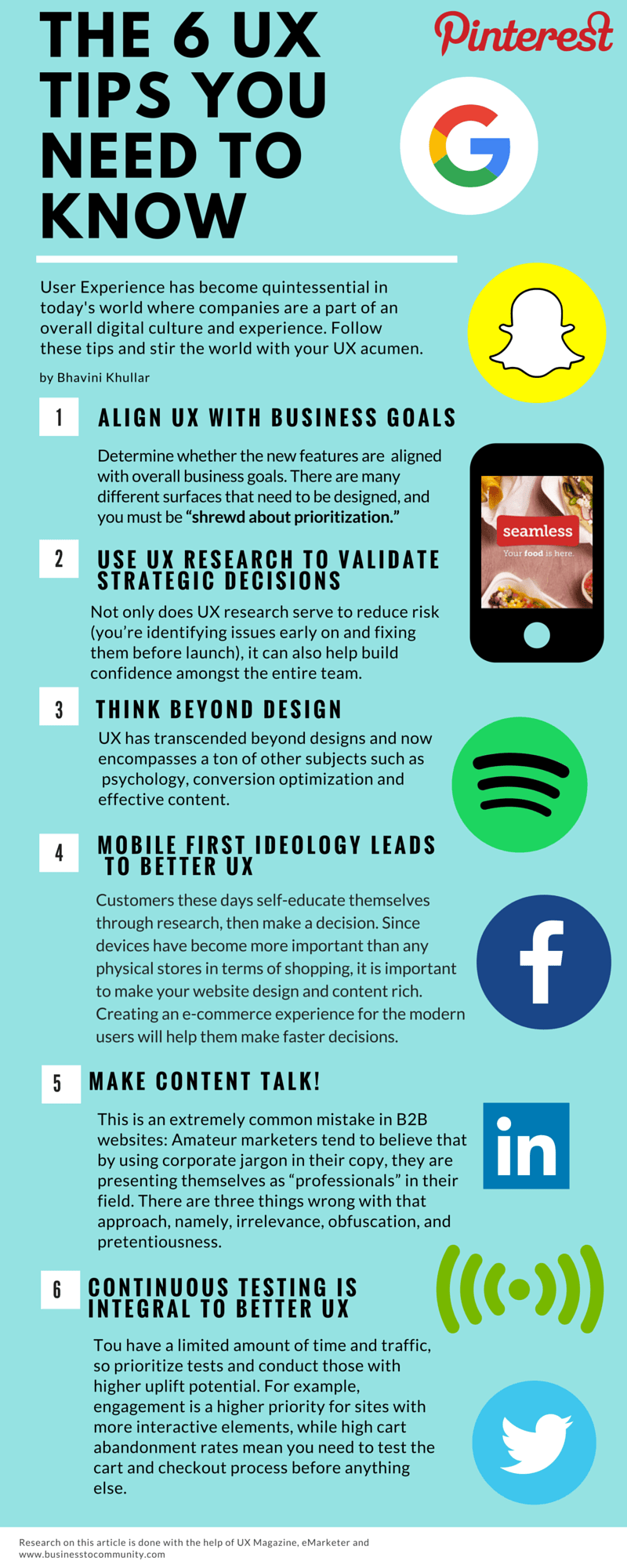
User Experience has evolved as a great marketing tool to increase conversion rates of customers. This is because User Experience has surpassed the narrow scope of design and has evolved several other forms of creativity such as content, gamification, usability, the use of the company culture.
Brands like Google, Pinterest, Facebook , Twitter, Lyft, Seamless have pioneered the art of UX making the experience effortless and meaningful. Here are a few tips to follow to broaden your understanding of UX and enable you to add more meaning to your customer experience as a whole.
Aligning user experience with business goals is key. It is very important to project user experience as an extension of the company culture. Extensive research must be conducted based on demographics, psychographics, choices, preferences and only then should the new features be launched. For example,Lyft conducted several focus group researches to conclude the inclination people had with the color Pink and that’s why the App is such a roaring success. Seamless had conducted extensive research on the font , color and the app layout before the launch mainly because they knew the psychographics of the customers who lack time and concentration due to their fast paced lives and would need an easily navigable website and app.Content is now pivotal to a website or an app, it was additional benefit the company has to offer.
I was reading an article the other day that said understand what you have to offer to your clients excluding the product or services offered by the company. This left an indelible imprint in my mind as it made me ponder and realize the importance of content and the role it plays in educating the minds of the users.These are some of the tips I found most useful, I hope they will hone your UX expertise and help you create brands that assimilate into the interconnected, ever-evolving digital culture of today’s world.
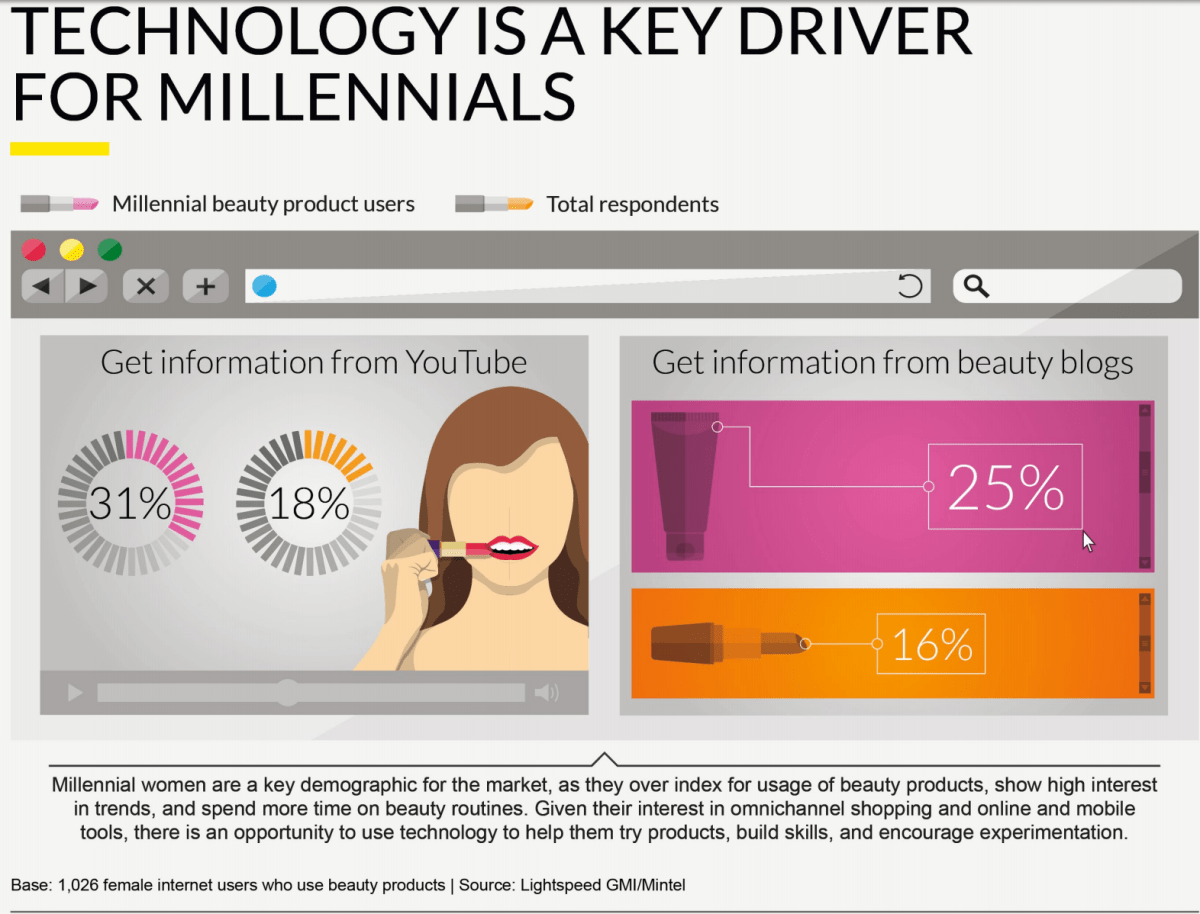
The world is evolving into a web of connected buyers who rely on one another for views, reviews , opinions about several products and brands. Make-up occupies a quintessential role in the lives of the millennial women, who compromises of 42% of the American population. This niche target audience of make-up brands is primarily glued to social media, which is why most of the make-up companies are capitalizing on this niche target audience.
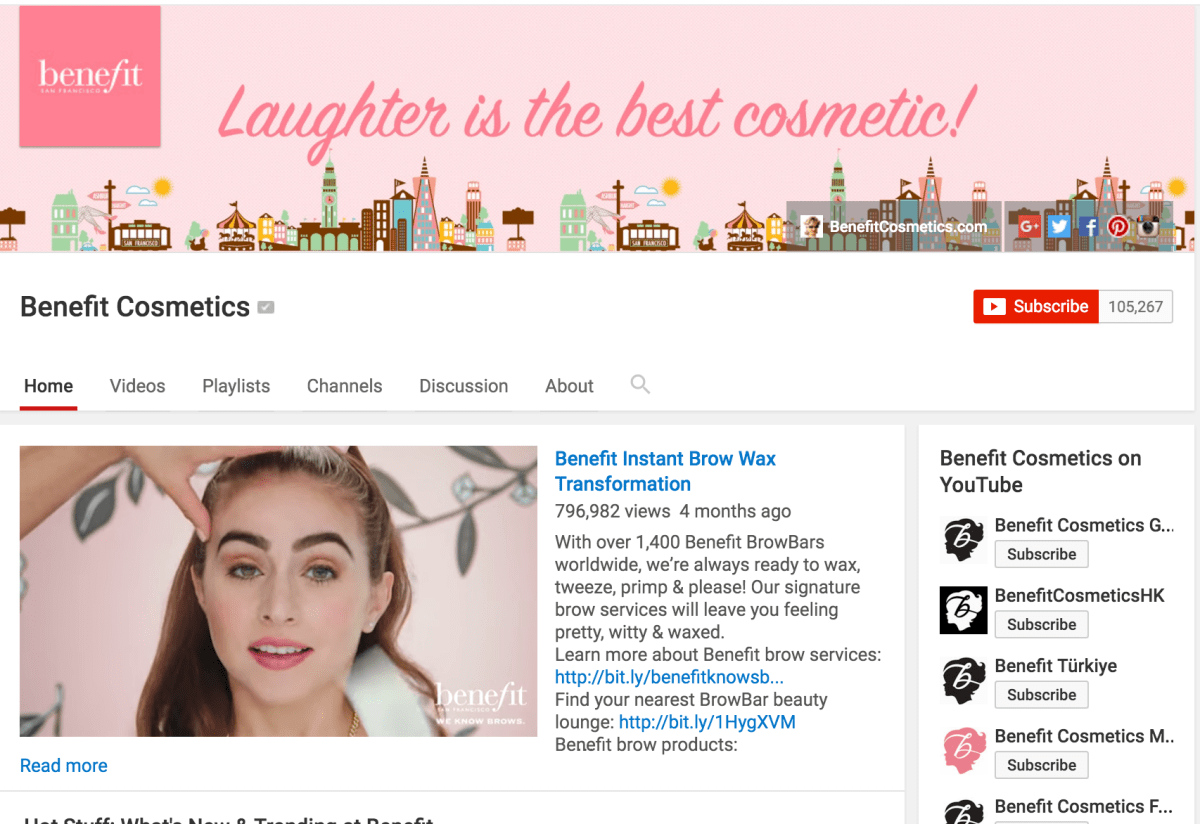
This cosmetic brand has pioneered the world of digital landscaping in the makeup industry. YouTube influencers are riding the wave for Benefit Cosmetics. Despite the 105,267 subscribers of its dedicated YouTube Channel, its YouTube influencers have a greater reach and hence, bring more impressions to the website. According to Alison Haljun, Vice President, Retail Marketing and PR at Benefit Cosmetics, the Company allots less than 10% of what it spends on its dedicated channel to the influencer bloggers and vloggers. It however, continues to spend on its YouTube Channel to bolster the strength of the brand. Another reason for this mismatched budget allocation is that the content shared on the dedicate YouTube Channel, is often shared by these YouTube influencers , hence magnifying the impact of its paid social media advertising on YouTube. The top YouTube bloggers employed by the company are eleventhgorgeous, Dulce Candy and Manny Mua.
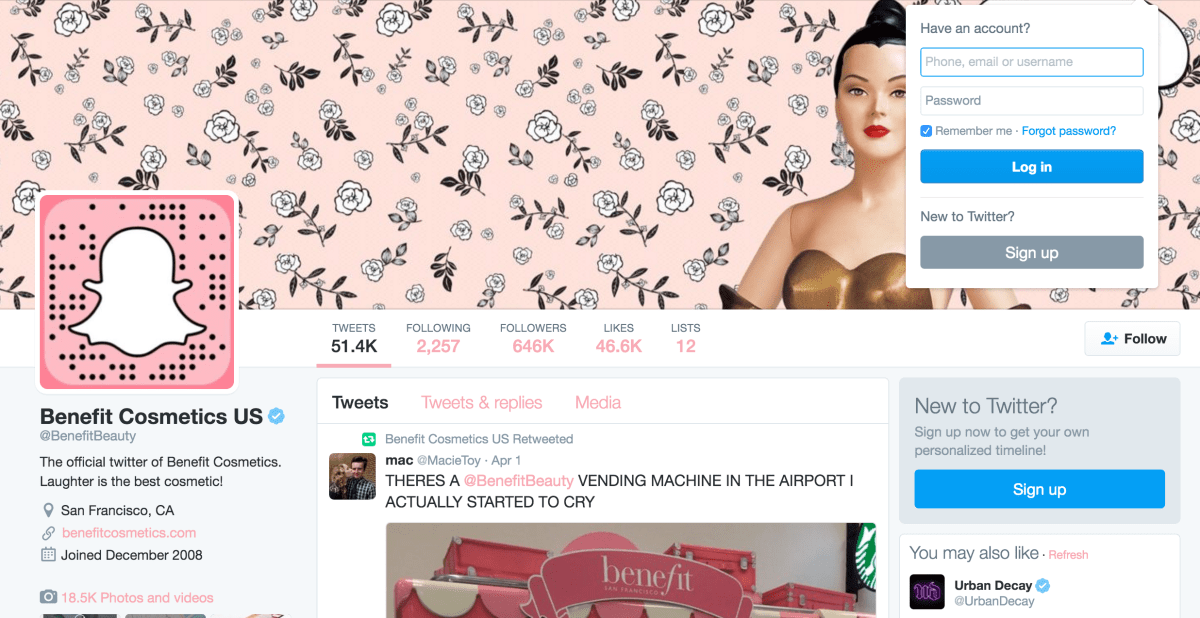
Benefit Cosmetics also uses Snapchat as an interactive tool to demonstrate videos of the latest lines of make-up. What I love about its Snapchat account is that not only does it show videos of its products, it also provides snaps of where these products are available. It does this through by incorporating snaps by the young female millenials, who they pay on commission basis, based on the number of views the snaps receive. It has also partnered with several celebrities that use Benefit Cosmetics in their videos as a means of native advertising by providing heavy sums of money. My favorite actress in India, Alia Bhatt, in fact uses Benefit Cosmetics in all her videos but the subtlety of the usage of the product is what I love about it the most. The makeup snapchats by Alia, don’t put out make up blatantly and intrigue me to want to know more about its products.
The brand has effectively understood its target audience, studied their psychographics and targeted them through paid digital media in the most efficient manner. In my humble opinion, Benefit Cosmetics has pioneered the digital space and used YouTube and Snapchat in a very proficient manner by integrating it with its Twitter account.
The resplendent, high-end luxury store, whose Brown Bag used to be a customary symbol of my birthday present each year was caught in a terrible controversy on November 11 last year. The mass outrage was caused due to its questionable print ad that stated an uber-creepy tagline “Spike your best friend’s eggnog when they’re not looking.”
Attired in clothing by Rebecca Minkoff, a male model (described by Jezebel writer Stassa Edwards as “some creep, who looks a little too much like Robin Thicke”) gazes at his friend as she looks away laughing.
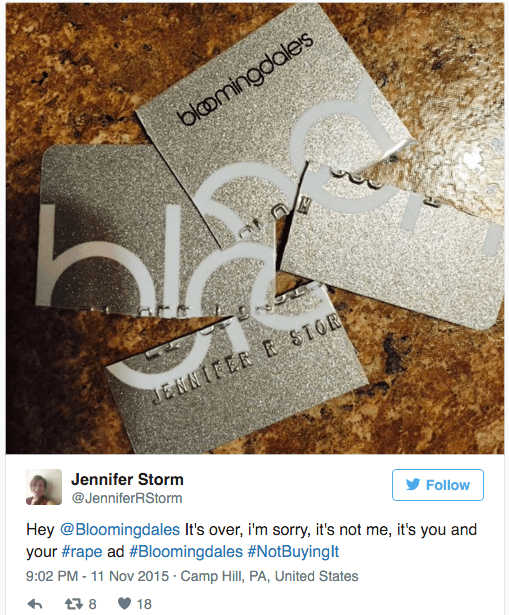
The ad drew ire from Twitter users for appearing to encourage date rape, which of course everyone found blatantly offensive.
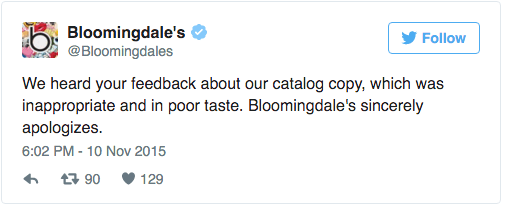
Bloomingdale’s apologized in a statement to Tech Insider stating, “In reflection of recent feedback, the copy we used in our recent catalog was inappropriate and in poor taste. Bloomingdales’ sincerely apologizes for this error in judgment,” a Bloomingdale’s representative told Tech Insider. As the ad began to draw more and more outrage online, Bloomingdale’s apologized on its Twitter page. Here is the link to the thread of comments on the apology: https://twitter.com/Bloomingdales/status/664216552544165888
I wasn’t happy with the way Bloomingdale’s handled the stir it had caused. The department store has a strong cultural heritage and goodwill to live up to and a mere tweet cannot bandage the offensively glaring mistake it made. For the kind of outrage it caused during the jubilant holiday season, it should’ve taken a more concrete, impactful step – donating towards a rape victim charity or even publishing another ad that doesn’t demean sex and portrays it as a beautiful expression of love.
Avoiding this fiasco was a no brainer – the content just had to be read! This is probably why the company gave no explanations or reasons whatsoever. The activists, persons in the media and the general public wondered how this was even possible because every ad copy follows a proper protocol of approvals.
I firmly believe that such incidences are not just under the scope of public relations. The marketing team as a whole has to come up with creative, meaningful and effective ways to curb the outcry of the public. Nothing is more dissatisfying than seeing one of your favorite companies being snooty and apathetic towards an outcry. I believe starting from the customer representative at the store, dealing with clients on a one-on-one basis to the CEO, who strategizes the business as a whole, must be proactively involved in healing the wounds in the hearts of their customers.
The tagline still lurks in my head as I walk into the store, only to make me nauseous and upset with the way Bloomingdale’s handled the crisis, because to me, mistakes are human, but what you do with them, is what matters the most.
Bestie Bloomingdale’s Brown Birthday Bag … Not anymore.
Intrigued by the new Starbucks Rewards Policy and how it has baffled other coffee connoisseurs like me, I was certain to take the 10-meter deep Olympic dive into the topic of gamification and how it affects consumer decision-making. Perusing through several articles pertaining to customer path, the article titled ‘Do Gamification Features Influence Purchasing Decisions?’ (Source:http://www.emarketer.com/Article/Do-Gamification-Features-Influence-Purchasing-Decisions/1013659) caught my complete attention. The article, published by eMarketer, categorically states that 10% of the respondents said they find the awarding of badges annoying. In addition, only 17% of the 3500 surveyed internet users said they are more likely to buy products from the company and that the gamification features have captured their attention.
I found these statistics rather puzzling. However, being a marketer, and realizing that more than 64% of online purchases take place on the mobile phone, I take majority of the bar graphs as an opportunity to make the customer path more interactive and engaging with the help of these game mechanics. Super Mario provides the perfect parallelism, where each point earned provided a competitive edge and instant gratification. The scores help unlock the next game and incentivize the player to continue playing and maintain the high adrenaline rush. This is exactly what many apps such as Foursquare, Starucks, Nike, FitBit, Mint.com and the alike are using – providing stickers/points/awards with purchases or check-ins, which provide badges/statuses/rewards that can be shared (via social media channels such as Twitter, Facebook).
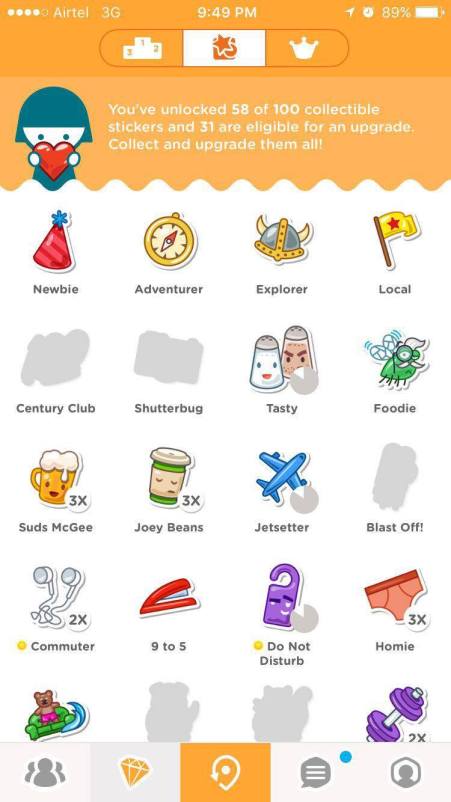
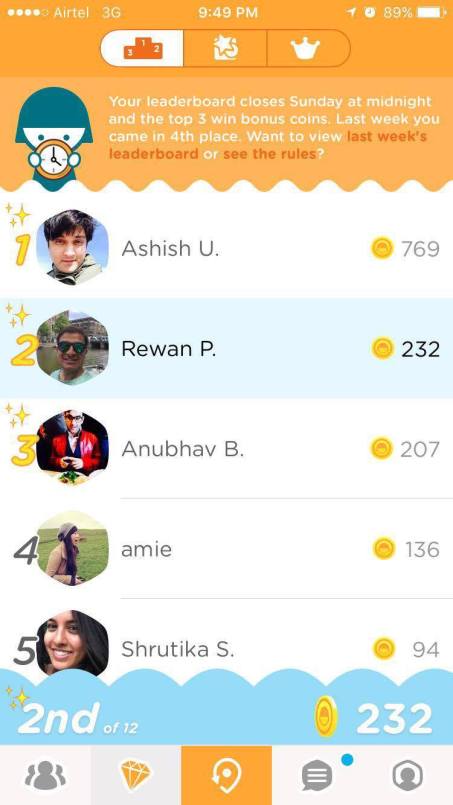
My friend is an obsessive Foursquare user. The App has a feature called Swarm, this feature provides ranks among friends, incentivizes him by providing stickers and giving designations based on the responses achieved by his tips on places to eat and travel. This makes the whole process of sharing information of food and travel very exciting for him and hence the app evolves as a meaningful platform to share information. However, for a mystical person like me , this gamification feature may be a little too intrusive. Having said that, I am an ardent user of the Starbucks App, which helps me graduate to the next level with every purchase I make at the store, thereby offering me more discount and a couple of freebies. This app keeps me away from La Colombe or Stumptown, because of its gamification feature and makes me a loyal customer of Starbucks Coffee, even if I have to walk an extra mile.
Stickers provided to the Foursquare usersRanks given to the Foursquare users
Hence, I believe, gamification is an excellent tool to encourage customer loyalty and can have a great influence on customer buying process provided the user is already embedded in the ecosystem of the brand and of course the App. The gaming feature cannot pull customers that lack interest or an inclination towards the brand , however, it can surely retain customer loyalty , which is an important subset of marketing.
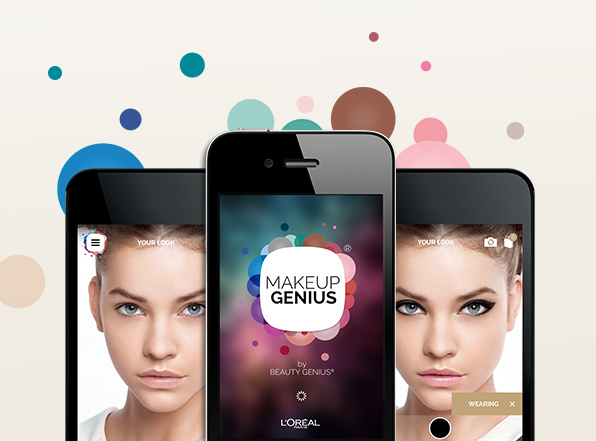
Pure genius. Blown-away. Amazed. Spellbound. L’oreal makeup genius just penetrated into the arteries of my heart and of course my soul! Launched in 2014, this is an app that took 10 years to create and uses the same technology that transformed Brad Pitt in The Curious Case of Benjamin Button, which won Oscars for both makeup and visual effects.
I’ve always associated makeup to vanity and narcissism, which is why despite being a twenty-two year old woman with a perennially spotted face, I have never walked into a makeup store. Never. May be I’ve just always been shy, which is why this app just transformed the way I perceive my bland face in the mirror every morning. This app made me feel like I could look beautiful too! Not pretty. Beautiful!
I downloaded the app half-heartedly, worried about the 3.8 KB storage it would take and within a couple of seconds I had entered the magical world of makeup. The App first asked me to take a picture of myself, I was intrigued, so I went ahead and clicked the relaxed selfie it asked for. The app used my picture to superimpose the makeup I selected from the array of options available to choose from.
The app essentially has three categories:
Tap to try a product on: This is the category with which one can try different products and do several permutation and combinations on the scanned faces. I played around with several products and was surprised by my voluminous eyelashes, luscious lips and perfectly contoured skin. The app then provided an option to buy the make-up products through Amazon.The virtual makeup looks can even be saved and shared on Facebook, Instagram and Twitter.
Tap to try the makeup look: This category enables the users to try red carpet , Oscar looks by world-famous celebrities.
Scan: This category enables the app users to scan several L’Oreal products at the stores and applies it on the virtual face instantly.
These are some of the make-up selfies that the app created , only to add fervor and joy to my dull Friday afternoon.
I found the app very playful , useful and interactive. It made me go beyond my comfort zone and that too, so effortlessly. I could choose between looks, products, tutorials, reviews of products, scan them for more information and even order them by simply clicking a button. The app just made the whole experience so much fun and exuberant. I fiddled with app with my roommates, saved and shared pictures and by the end of it all of us were baffled by our extravagant overspends on makeup. This is also one of the reasons that I found the app innovative. The use of its cutting edge technology combined with the essence of beauty, e-commerce and emotional marketing made me enjoy the mirror that my phone screen was created into. Underscoring the aspect of aesthetics, the colors, and the font in the app are youthful, zesty and lively – very appealing to its target audience. What I particularly liked about the app is that it combines the concept of brick and mortar to the digital experience, due to the scanning the barcode option. The app has truly revolutionized the whole make-up shopping experience and the results were astounding too. It held the no. 1 spot in App Store’s lifestyle category for four weeks after its launch and has been shared more than 495K times.
My only concern with the app is that it is not easily navigable. I kept getting lost as the app doesn’t have a home button or a discrete drop down menu. This to me was a profound hindrance that the app must look into.
The app however, is a life changer. It helped me overcome my preconceived notions of makeup and saved me from the embarrassment of trying makeup at a drugstore. I highly recommend everyone to download the app, not to buy makeup but to admire the sheer genius of digital marketing and how the brand caught the pulse of its target audience and created a platform that helped women overcome their fears, eventually driving traffic and increasing sales exponentially … because generating profit is always the sole objective of any business.
If there is one word that describes Bobbi Brown’s website, it has to be simplistic. The high-end cosmetic company has integrated the use of two bold colors, black and white, both lying on the extremes of the color spectrum.The combination is even more crucial because it underscores the broad range of diverse colors in makeup. The use of sharp and potent typography adds depth, saturates and enhances the user experience and makes the website seem lucid and customer friendly.
The website is systematic and methodical. The home page is mostly black white, with a dash of pastel colors in the frames, only to add zest and youthfulness. ‘BOBBI BROWN’ is written in bold and aligned to the center of the page and navigates the user back to the home page, making it easy to browse through the website. The website is designed for touch, mostly for the sake of mobile and tablet users. The company has also released an App on Behance for its customers wanting to purchase makeup using their smartphones.
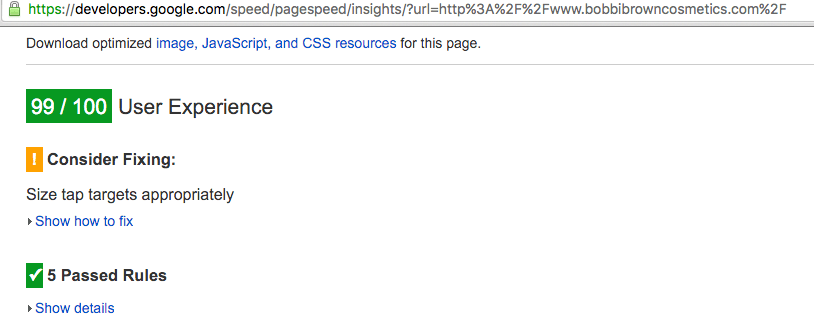
I wasn’t surprised to see the 99/100 score in terms of Bobbi Brown’s User Experience test which I did by using a Google product called Page Insights. The experience truly is extremely methodical and seamlessly easy.
There are certain noteworthy features about the website that stood out for me as a customer. There are online tutorials and makeup content available for us to peruse. This is an innovative strategy of combining content with commerce, as at the end of the video, there are certain products that the brand lures us to purchase. There is a live chat option with sales assistants, who also have makeup expertise and in addition to the live chat, customers can email makeup artists for clarifications and make-up application help. There is also a click to call button, which makes the company even more approachable and accessible for its consumers. What I also liked about the website was that as a customer, one can checkout without signing up for newsletters and not be inundated by a plethora of daily, unwanted emails. There is also a site search option available, which helps expedite the whole shopping experience and helps convert quicker. The home page also provides an interactive permutation and combination of the product choices one could choose from.
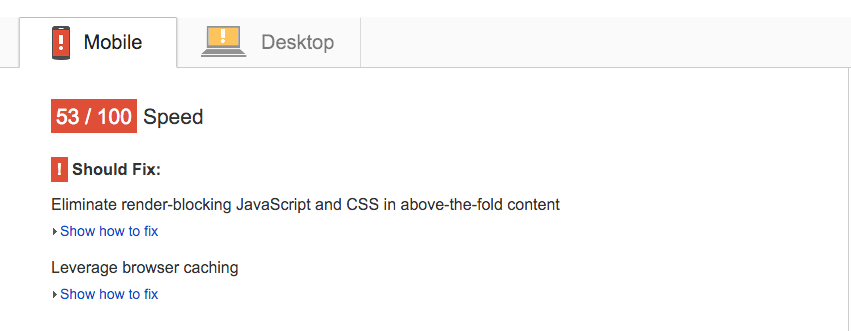
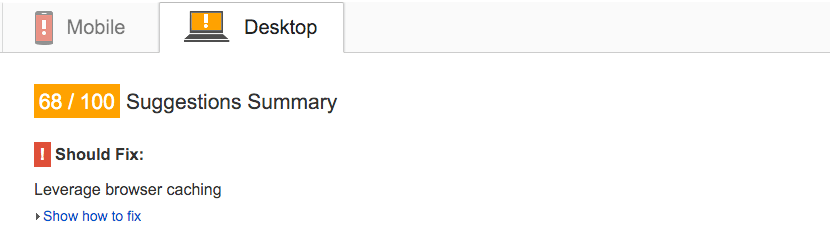
There were however, some important flaws that I would want to mention. The website lacks personalization. The design is not as visually appealing or innovative as it uses a mundane format, with no detailed visuals. I am also concerned about whether the brand is able to communicate its story to the customers. If I was to remove the label of the website, I couldn’t tell it is Bobbi Brown’s website, which to me is a profound objective of any company – to be able to recognize the brand without the label on it. In terms of functionality, I was disappointed to see the speed of the website on Page Insights for both Mobile and desktop users.
Hence I believe, in terms of functionality, the brand has done a terrific job to make the website across all media an enjoyable experience but the brand lacks in storytelling, as it is not able to create the exhilarating thrill and sheer happiness that I experience when I enter its store on Fifth Avenue. The brand needs a little more exuberance, cheer and liveliness to be able to communicate its brand appeal better.













 Bhavini Khullar